Dans le Nouvel’Obs on apprend que le Qautar aurait fait une « avance » à l’UE sur le montant de la transaction. Mais il semblerait que Khadafi aurait fait monter les enchères avec la France seule. Quoi ? Combien ? pour la belle photo…
La Libye a actuellement deux axes forts de développement : l’agriculture, avec le fameux aqueduc souterrain du désert (construit par les français, et qui devrait provoquer un affaissement du niveau du shara de plus de 2 mètres en quelques décennies) et le tourisme, avec les fabulaux sites archéologiques et les treking dans le sud. Le reste, c’est du niveau de la part du rêve de Kadhafi. Mais Dieu sait à quoi rêvent les dictateurs… N’oublions pas également que les libyens ont un énorme problème d’immigration clandestine, comme tous les pays du Maghreb, et qu’ils ont besoin de la coopération des européens sur ce point.
Nuclear Chronology 1968-1979 This annotated chronology is based on the data sources that follow each entry. Public sources often provide conflicting information on classified military programs. In some cases we are unable to resolve these discrepancies, in others we have deliberately refrained from doing so to highlight the potential influence of false or misleading information as it appeared over time. In many cases, we are unable to independently verify claims. Hence in reviewing this chronology, readers should take into account the credibility of the sources employed here. Inclusion in this chronology does not necessarily indicate that a particular development is of direct or indirect proliferation significance. Some entries provide international or domestic context for technological development and national policymaking. Moreover, some entries may refer to developments with positive consequences for nonproliferation. 18 July 1968 Under the regime of King Idris al-Sanusi, Libya signs the Treaty on the Non-Proliferation of Nuclear Weapons (NPT).
Pour rappel Tajura Nuclear Research Center, 10MW research reactor (supplied by USSR)
Importante affaire entre Areva et Niger … et la libye, on en reparle
Libya Early in 2007 it was reported that Libya was seeking an agreement for US assistance in building a nuclear power plant for electricity and desalination. In 2006 an agreement with France was signed for peaceful uses of atomic energy. In 2003 Libya had halted a clandestine program developing uranium enrichment capability, and fully opened itself to IAEA inspections. Libya has a Russian 10 MW research reactor which is under IAEA safeguards.
ou l’on revient sur aide nucléaire dans le médical … U.S. denies plan to help Libya develop nuclear power plant The United States said on Tuesday that it has no plan to help Libya with developing a nuclear power plant, although the Libyan government tried to seek U.S. assistance in this regard. « There’s no formal pending nuclear cooperation agreement with Libya on nuclear power plants or any other nuclear issues, » State Department deputy spokesman Tom Casey said at a briefing. « We are in discussions with the Libyans regarding a project to help them develop a nuclear medicine center, and that is the only thing you could use the word ‘nuclear’ in relation to past agreements, » Casey said. According to media reports, the Libyan government wants to discuss with the United States with the aim of reaching an agreement on the peaceful use of nuclear power. Relations between the United States and Libya have improved dramatically since Tripoli agreed in December 2003 to eliminate its chemical and biological weapons, permitting U.S. weapons experts to verify its compliance. Moreover, Libya has accepted responsibility for the 1988 Lockerbie bombing that killed 270 people and agreed to pay compensations to the families of the bombing victims. All these pave the way for the normalization of relations between the two countries. Source: Xinhua
U.S., Libya negotiating nuclear medicine project 12 Mar 2007 22:16:54 GMT Source: Reuters By Carol Giacomo, Diplomatic Correspondent WASHINGTON, March 12 (Reuters) – The United States is close to reaching an agreement with Libya for cooperation on a nuclear medicine center but for now has no plans for the kind of broad nuclear energy development Tripoli has suggested, a U.S. official said on Monday. Libya’s official Jana news agency reported earlier on Monday that an agreement between the two countries that would help Libya generate nuclear electricity would be signed shortly. But the U.S. official, in an interview with Reuters, said the Jana report « vastly overstates things. » « What we said to the Libyans after they got rid of their nuclear weapons effort (was) we’d be open to talking to them about some aspects of civilian uses of nuclear power, » said the official who works on nonproliferation issues and spoke on condition of anonymity. Toward that end, « we talked to them about a nuclear medicine center and we are engaged in serious discussions about our willingness to assist with that project, » which would benefit the health of the Libyan people, he said. The Jana report said the U.S.-Libya cooperation would include building a nuclear power plant, helping develop water desalination capacity, joint research and technical projects and training Libyan technicians in the United States. However an official Libyan source later told journalists in Tripoli that Libya was planning to negotiate an agreement with the United States on the peaceful use of nuclear energy. The source made no mention of a planned signing of an accord. « The Libyan government gave the Foreign Ministry an authorisation to enter negotiations with America to reach an agreement related to the peaceful use of nuclear energy in all fields, » the official source said. Nuclear medicine uses internally administered radioactive materials, called radioisotopes, to help diagnose and treat a wide variety of diseases. Exact details about the center’s cost and specific projects were not immediately available. The U.S. official added that the Bush administration had expected the agreement — negotiated by the State Department and Department of Energy — to be signed by Libyan authorities late last week and was surprised when it was not. LIMITED PLANS He said there were no discussions or specific plans to help oil- and gas-exporting Libya develop or benefit from nuclear energy. A State Department deputy spokesman, Tom Casey, told a news briefing, « I’m certainly aware of no plans for the United States to participate in nuclear programs with Libya. » Libya in 2003 ended years of international estrangement by accepting responsibility and starting to pay compensation for the bombing of airliners over Scotland and Niger in 1988 and 1989. It also promised to give up nuclear, chemical and biological weapons and has followed through on those promises. But Libyan leader Muammar Gaddafi said at the time he still hoped to develop a nuclear program for peaceful purposes. Washington has voiced hopes that Iran and North Korea will follow Libya’s example. On March 3 Gaddafi renewed a recent complaint that Western countries had failed to properly compensate Libya for scrapping its nuclear arms program and as a result countries like Iran and North Korea would not follow his lead. The U.S. official interviewed by Reuters said that nuclear energy cooperation could be explored in the future but is more likely to involve construction of nuclear power-generating plants in neighboring Egypt, a long-time U.S. ally, with the power shared on a grid across country boundaries with Libya. Talk of nuclear energy cooperation is « very premature, » he said, adding: « The only thing of any concrete nature that we discussed with the Libyans that I’m aware of is the nuclear medicine center. »
Research ReactorsName: Tajura Research Reactor, IRT-1, Tajoura Research ReactorFunction: Research reactor; production of isotopes for use in medicine and agriculture. Description: The Soviet-designed Tajura Research Reactor, located at the Tajoura Nuclear Research Center, is a 10 MW reactor, although this level of performance was only reached a few times. Normal operation was at 5MW. It is a light water-cooled and moderated, beryllium-reflected reactor. Construction began in 1977, and operations commenced in 1981. Support from the Soviet Union was discontinued in 1991. Since then the reactor has been managed by local staff, but operation has been intermittent. In 1998, Russia signed a contract for the reconstruction of critical networks at the facility. The reactor uses IRT-2 type fuel. This is a
Tiens, tiens … pour rappel .. Libye : EADS et Dassault pour l’armée ?
Merci
d
I simply want to say I’m new to blogging and really loved this web page. Probably I’m planning to bookmark your blog . You surely have beneficial posts. Regards for sharing your blog.
I have been wanting to start blogging and/or vlogging for a while, and I was wondering what to do to prepare to start vlogging and what type of camera to get and just anything information you could give me on the subject. This would be a tremendous help to me. Serious answers only please. Thank you..
 Comme quoi sur le blog finance, nos suppos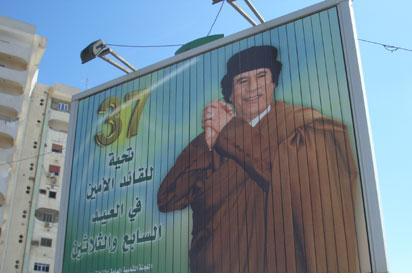


Dans le Nouvel’Obs on apprend que le Qautar aurait fait une « avance » à l’UE sur le montant de la transaction.
Mais il semblerait que Khadafi aurait fait monter les enchères avec la France seule. Quoi ? Combien ? pour la belle photo…
La Libye a actuellement deux axes forts de développement : l’agriculture, avec le fameux aqueduc souterrain du désert (construit par les français, et qui devrait provoquer un affaissement du niveau du shara de plus de 2 mètres en quelques décennies) et le tourisme, avec les fabulaux sites archéologiques et les treking dans le sud.
Le reste, c’est du niveau de la part du rêve de Kadhafi. Mais Dieu sait à quoi rêvent les dictateurs…
N’oublions pas également que les libyens ont un énorme problème d’immigration clandestine, comme tous les pays du Maghreb, et qu’ils ont besoin de la coopération des européens sur ce point.
Nuclear Chronology
1968-1979
This annotated chronology is based on the data sources that follow each entry. Public sources often provide conflicting information on classified military programs. In some cases we are unable to resolve these discrepancies, in others we have deliberately refrained from doing so to highlight the potential influence of false or misleading information as it appeared over time. In many cases, we are unable to independently verify claims. Hence in reviewing this chronology, readers should take into account the credibility of the sources employed here.
Inclusion in this chronology does not necessarily indicate that a particular development is of direct or indirect proliferation significance. Some entries provide international or domestic context for technological development and national policymaking. Moreover, some entries may refer to developments with positive consequences for nonproliferation.
18 July 1968
Under the regime of King Idris al-Sanusi, Libya signs the Treaty on the Non-Proliferation of Nuclear Weapons (NPT).
Pour rappel
Tajura Nuclear Research Center, 10MW research reactor (supplied by USSR)
Importante affaire entre Areva et Niger … et la libye, on en reparle
Libya
Early in 2007 it was reported that Libya was seeking an agreement for US assistance in building a nuclear power plant for electricity and desalination. In 2006 an agreement with France was signed for peaceful uses of atomic energy.
In 2003 Libya had halted a clandestine program developing uranium enrichment capability, and fully opened itself to IAEA inspections.
Libya has a Russian 10 MW research reactor which is under IAEA safeguards.
ou l’on revient sur aide nucléaire dans le médical …
U.S. denies plan to help Libya develop nuclear power plant
The United States said on Tuesday that it has no plan to help Libya with developing a nuclear power plant, although the Libyan government tried to seek U.S. assistance in this regard.
« There’s no formal pending nuclear cooperation agreement with Libya on nuclear power plants or any other nuclear issues, » State Department deputy spokesman Tom Casey said at a briefing.
« We are in discussions with the Libyans regarding a project to help them develop a nuclear medicine center, and that is the only thing you could use the word ‘nuclear’ in relation to past agreements, » Casey said.
According to media reports, the Libyan government wants to discuss with the United States with the aim of reaching an agreement on the peaceful use of nuclear power.
Relations between the United States and Libya have improved dramatically since Tripoli agreed in December 2003 to eliminate its chemical and biological weapons, permitting U.S. weapons experts to verify its compliance.
Moreover, Libya has accepted responsibility for the 1988 Lockerbie bombing that killed 270 people and agreed to pay compensations to the families of the bombing victims. All these pave the way for the normalization of relations between the two countries.
Source: Xinhua
U.S., Libya negotiating nuclear medicine project
12 Mar 2007 22:16:54 GMT
Source: Reuters
By Carol Giacomo, Diplomatic Correspondent
WASHINGTON, March 12 (Reuters) – The United States is close to reaching an agreement with Libya for cooperation on a nuclear medicine center but for now has no plans for the kind of broad nuclear energy development Tripoli has suggested, a U.S. official said on Monday.
Libya’s official Jana news agency reported earlier on Monday that an agreement between the two countries that would help Libya generate nuclear electricity would be signed shortly.
But the U.S. official, in an interview with Reuters, said the Jana report « vastly overstates things. »
« What we said to the Libyans after they got rid of their nuclear weapons effort (was) we’d be open to talking to them about some aspects of civilian uses of nuclear power, » said the official who works on nonproliferation issues and spoke on condition of anonymity.
Toward that end, « we talked to them about a nuclear medicine center and we are engaged in serious discussions about our willingness to assist with that project, » which would benefit the health of the Libyan people, he said.
The Jana report said the U.S.-Libya cooperation would include building a nuclear power plant, helping develop water desalination capacity, joint research and technical projects and training Libyan technicians in the United States.
However an official Libyan source later told journalists in Tripoli that Libya was planning to negotiate an agreement with the United States on the peaceful use of nuclear energy.
The source made no mention of a planned signing of an accord.
« The Libyan government gave the Foreign Ministry an authorisation to enter negotiations with America to reach an agreement related to the peaceful use of nuclear energy in all fields, » the official source said.
Nuclear medicine uses internally administered radioactive materials, called radioisotopes, to help diagnose and treat a wide variety of diseases. Exact details about the center’s cost and specific projects were not immediately available.
The U.S. official added that the Bush administration had expected the agreement — negotiated by the State Department and Department of Energy — to be signed by Libyan authorities late last week and was surprised when it was not.
LIMITED PLANS
He said there were no discussions or specific plans to help oil- and gas-exporting Libya develop or benefit from nuclear energy.
A State Department deputy spokesman, Tom Casey, told a news briefing, « I’m certainly aware of no plans for the United States to participate in nuclear programs with Libya. »
Libya in 2003 ended years of international estrangement by accepting responsibility and starting to pay compensation for the bombing of airliners over Scotland and Niger in 1988 and 1989.
It also promised to give up nuclear, chemical and biological weapons and has followed through on those promises. But Libyan leader Muammar Gaddafi said at the time he still hoped to develop a nuclear program for peaceful purposes.
Washington has voiced hopes that Iran and North Korea will follow Libya’s example.
On March 3 Gaddafi renewed a recent complaint that Western countries had failed to properly compensate Libya for scrapping its nuclear arms program and as a result countries like Iran and North Korea would not follow his lead.
The U.S. official interviewed by Reuters said that nuclear energy cooperation could be explored in the future but is more likely to involve construction of nuclear power-generating plants in neighboring Egypt, a long-time U.S. ally, with the power shared on a grid across country boundaries with Libya.
Talk of nuclear energy cooperation is « very premature, » he said, adding: « The only thing of any concrete nature that we discussed with the Libyans that I’m aware of is the nuclear medicine center. »
Research ReactorsName: Tajura Research Reactor, IRT-1, Tajoura Research ReactorFunction: Research reactor; production of isotopes for use in medicine and agriculture.
Description: The Soviet-designed Tajura Research Reactor, located at the Tajoura Nuclear Research Center, is a 10 MW reactor, although this level of performance was only reached a few times. Normal operation was at 5MW. It is a light water-cooled and moderated, beryllium-reflected reactor. Construction began in 1977, and operations commenced in 1981. Support from the Soviet Union was discontinued in 1991. Since then the reactor has been managed by local staff, but operation has been intermittent. In 1998, Russia signed a contract for the reconstruction of critical networks at the facility.
The reactor uses IRT-2 type fuel. This is a
Volets secrets de l’accord Sarkozy-Kadhafi…
25/07/2007-10h11 – Hervé Gattegno – Rubrique coordonnée par Irène Inchauspé – © Le Point.fr
L
Tiens, tiens …
pour rappel ..
Libye : EADS et Dassault pour l’armée ?
Merci
d
I simply want to say I’m new to blogging and really loved this web page. Probably I’m planning to bookmark your blog . You surely have beneficial posts. Regards for sharing your blog.
I have been wanting to start blogging and/or vlogging for a while, and I was wondering what to do to prepare to start vlogging and what type of camera to get and just anything information you could give me on the subject. This would be a tremendous help to me. Serious answers only please. Thank you..
How can I do a live streaming webcast on Blogger?