
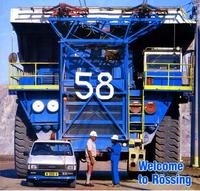
 Alors que les risques d’une pénurie de ce type de matières premières pointe à l’horizon, la Namibie vient d’annoncer que sa production d’uranium a progressé de 6 % en 2009.
A l’heure actuelle, ce matériau indispensable pour la production d’énergie nucléaire, n’est exploité que sur deux sites dans le pays.
Selon des chiffres publiés cette semaine par l’Institut Old Mutual Namibia qui compile les données du secteur, ce pays, qui constitue l’un des principaux producteurs au monde de ce matériau, a ainsi produit 5.429 tonnes d’uranium au total durant l’année écoulée.
La principale mine, Rossing, détenue à 68,6% par le géant australien Rio, a produit 1.166 tonnes au 4ème trimestre 2009, soit 3,5% de plus que le trimestre précédent.
La seconde mine, Langer Heinrich, filiale de l’Autralien Paladin Energy, a extrait pour sa part 382 tonnes au dernier trimestre, soit une augmentation de 28,6% par rapport au 3ème trimestre, des travaux d’agrandissement permettant d’obtenir de tels chiffres.
En juillet 2009, la « Rössing Uranium » avait annoncé que sa production d’uranium avait augmenté de 25%, passant de 3.046 en 2007 à 4.108 tonnes d’oxyde d’uranium en 2008, soit sa production la plus importante depuis 20 ans. Le directeur général de la compagnie, Mike Leech, avait alors déclaré que la société allait atteindre l’objectif qu’elle s’était fixée pour 2012 : produire 4.500 tonnes d’oxyde d’uranium.
Après avoir débuté ses opérations en 1976, Rossing avait pourtant envisagé une fermeture des sites lorsque les prix de l’uranium avaient chute dans les années 1990.
Mais en raison du regain d’intérêt à l’échelle mondiale pour l’énergie nucléaire, les prix de l’uranium sont progressivement repartis à la hausse. C’est dans un tel contexte qu’en 2008, la direction de la mine a affirmé que la durée d’exploitation du site était prolongée à 2026.
Désormais, le secteur minier de Namibie est en pleine expansion avec l’ouverture de nouveaux gisements d’uranium qui pourraient placer le pays, quatrième producteur mondial d’uranium en 2008, au premier rang des producteurs du combustible nucléaire.
En septembre, une autre entreprise australienne, Extract Resources, a annoncé la découverte de nouveaux gisements qui pourraient être exploités pendant vingt ans.
Des perspectives qui n’ont pas échappé à la Russie … Effectuant sa première tournée en Afrique en juin 2009, le président russe Dmitri Medvedev a ainsi déclaré vouloir développer ses relations avec la Namibie, quatrième producteur mondial d’uranium, et plus largement avec le continent noir.
Le ministre russe des Ressources naturelles, Yury Trutnev, s’est dit alors prêt à développer le nucléaire dans ce pays d’Afrique australe. « La Namibie a grandement besoin de développer son secteur énergétique », a-t-il ainsi estimé.
En 2007, la Russie s’était déjà intéressée à la Namibie mais rien de majeur n’avait été concrétisé. Une licence d’exploration avait toutefois été accordée à une co-entreprise menée par Tekhsabexport, la compagnie d’Etat russe qui commercialise l’uranium.
Sources : AFP, PANA Presse
Quid du gisement de Trekkopje qu’areva via UraMin devait commencé a exploité fin 2009, une licence avait été signé en 2008 pour un investissement de l’ordre d’environ 500 millions d’euros.
A ce sujet, notamment
5 mai 2009
Mines : AREVA et la Namibie renforcent leur coopération stratégique
Anne Lauvergeon, Présidente du Directoire d’AREVA, a signé aujourd’hui un accord industriel avec le Ministre des Mines et de l’Energie namibien Erkki Nghimtina en présence du Président de la République de Namibie Hifikepunye Pohamba.
Les partenaires vont créer une société commune d’exploration minière débouchant sur de futures exploitations d’uranium.
Par la signature de ce nouvel accord, AREVA confirme son rôle de partenaire stratégique de la Namibie : le groupe s’engage à accompagner le pays dans sa démarche de valorisation des ressources en uranium du pays et à contribuer au développement des compétences par la formation et l’enseignement supérieur.
Interrogée sur la signature de cet accord à sa sortie de la State House de Windhoek, Anne Lauvergeon a déclaré : « Je suis très heureuse de la confiance que témoigne de nouveau le gouvernement namibien à AREVA après l’attribution de la licence d’exploitation du gisement de Trekkopje et la construction d’une usine de dessalement. Elargissant le spectre, nous allons explorer avec le gouvernement d’autres ressources uranifères sur d’autres territoires. Ce sont les premiers jalons décisifs réussis d’une longue histoire ».
AREVA en Namibie
Le groupe développe le projet minier de Trekkoppje dont les premières productions sont attendues en 2010. AREVA construit en parallèle une usine de dessalement d’eau de mer qui couvrira l’ensemble des besoins en eau de la mine de Trekkopje. Le projet Trekkopje emploie actuellement 140 personnes (projets et opérations) et 320 postes sont à pourvoir d’ici juin 2010, les effectifs totaux atteignant à long terme 1100 (dont 600 sous-traitants pour les opérations minières). En outre, le chantier de l’usine de dessalement emploie actuellement 500 personnes tandis que le chantier de construction du projet aura un effectif maximum de 1100 personnes (200 aujourd’hui).
Mais encore :
Namibia: India, Russia Keen On Trekkopje
Jo-Mar
merci pour ces précisions.
cf egalement
http://www.mining-technology.com/projects/trekkopje-mine/
The Trekkopje mine is a uranium mine located in western Namibia in southern Africa, approximately 65km north-east of Swakopmund. The mine is owned by Areva and currently under construction. In June 2008, Areva obtained the mining license from the Namibian Government and has since invested $900m in the project.
The mine will begin full-scale production in 2011. Upon commissioning, the mine is poised to become the largest in southern Africa and the tenth-largest in the world. The estimated mine life is 12 years.
plus precisement encore
Production
During its lifetime, the mine will produce an estimated 8.5 million pounds of uranium oxide. Annual production will be 3,000t of uranium ore at an average grade of 120 parts per million. Through a mini pilot facility, the mine achieved its first production in March 2009. In this first phase of development, the mine produced a bulk sample of 80,000t of sodium diuranate. The second phase continued until the end of 2009 and produced a larger sample of three million tonne. The third phase, which will oversee full production, is due to begin in 2010.
http://www.mining-technology.com/projects/trekkopje-mine/
A noter également :
Strong start to 2010 for uranium explorer Marenica as Areva takes stake
Thursday , 14 Jan 2010
KEY POINTS
· Global nuclear giant Areva NC has agreed to acquire a 10.6% strategic stake in Marenica in late December 2009 from Polo Resources PLC
· Areva owns the Trekkopje Uranium Mine, located 30km from the Marenica Project – due for commissioning in 2011
· 16 new exploration targets identified within broader Marenica Project from new airborne radiometrics and magnetic – key focus for 2010
· Work continuing on final Marenica resource upgrade due in January 2010 following interim upgrade to 122Mt grading 140ppm U3O8 in November 2009
International uranium company Marenica Energy Limited (ASX: MEY) is pleased to provide a company update following significant corporate developments over the Christmas period and the receipt of encouraging new exploration data from its 80%-owned Marenica Uranium Project in Namibia, Southern Africa.
Areva Acquires 10.6% Stake in Marenica Energy
In late December 2009, the French-based multinational industrial and nuclear energy giant, Areva NC, has agreed to acquire a 10.57% interest in Marenica from Polo Resources PLC, on terms and conditions set out together with the Substantial Interest Notice (Form 603) lodged on 23 December 2009.
Areva, which is the world leader in the nuclear fuel cycle, from uranium mining, conversion and enrichment through to spent fuel re-processing and re-cycling, has a majority interest in the Trekkopje Uranium Mine, which is located less than 30km from the Marenica Project.
The Trekkopje deposit is a shallow, high-tonnage, low-grade uranium deposit hosted by calcretised palaeo-channels. Full production at Trekkopje is anticipated to commence in 2011 with a forecast initial mine life of 12 years.
Areva’s Southern African subsidiary, AREVA Resources Namibia, has key infrastructure, including a desalination plant at Wlotzkasbaken, located approximately 30 km north of Swakopmund – a first for Southern Africa – that will supply sufficient water to support the mining operations at Trekkopje Mine, which lies approximately 40km inland into the desert.
JORC Resource Upgrade Nearing Completion
Marenica is pleased to advise that its resource consultants, SRK Consulting (SRK) Pty Ltd, are continuing to work on the Marenica Resource Estimate update due at the end of January. All probe data and QA/QC assay data have now been compiled, and the resource update is on track to be finalised and announced in late January/early February 2010.
The Company released a series of positive results from the Marenica Project prior to Christmas, including an interim Resource Estimate upgrade announced on 18 November of 122 million tonnes grading 140ppm U3O8, comprising an Indicated Resource of 16 million tonnes grading 170ppm U3O8 and an Inferred Resource of 106 million tonnes grading 140ppm U3O8.
Multiple New Exploration Targets Identified
The Company is also pleased to report that 16 new priority exploration targets have been identified following the receipt of new airborne radiometric and magnetic data for the Marenica Project. Preliminary interpretation of the data has been completed within an area of 340 square kilometres.
Marenica’s exploration team in Namibia will begin ground checking and sampling of the anomalies in early 2010.
Anomalies have been categorised as primary granite-hosted targets and secondary uranium palaeo-channel-hosted targets, similar to the Marenica deposit. The high resolution data was collected By UTS Geophysics, with a total of 4,394 line kilometres flown during late November 2009. The raw data obtained has been merged, levelled and re-processed with the 2007 Marenica survey, resulting in a total coverage of 340 square kilometres.
Primary granite-hosted targets analogous to the previously identified Phillipus and Springbok prospects have been identified within and adjacent to the Main Dome and Southern Dome Areas.
A number of secondary (supergene) targets have also been identified in areas adjacent to the Marenica resource, as well as previously untested downstream parts of the Marenica Palaeo-channel and adjacent to the prospective Southern Dome region.
ok et de mon coté j’ai retrouvé ce papier de reuters qui fait le point sur les projets a venir en namibie.
Here is a list of existing mines and planned projects:
EXISTING MINES
* Rio Tinto’s Rossing mine produces roughly 4,000 tonnes of uranium per annum – or about 8 percent of the world’s output — and plans to sustain that output until 2023. With a heap leach facility planned, production at the mine could be expanded by a further 500 tonnes.
* Paladin Energy’s Langer Heinrich mine is expected to raise capacity to rise to 3.7 million pounds from 2.6 million this year and to 5.2 million pounds next year. In the long term, capacity will be raised to 10 million pounds by 2014.
POTENTIAL PROJECTS:
* Areva’s Trekkopje open-pit mine is expected to start production in 2011, rising to 3,500 tonnes of uranium per year. The French state-owned firm bought the mine when it acquired UraMin in 2007 for $2.5 billion.
* Extract Resources owns the Rossing South project, touted to become the world’s second-largest uranium deposit following recent exploration results. Extended zones 1 and 2 at the project could contain more than 500 million pounds of uranium oxide, making the deposit the biggest after BHP Billiton’s Olympic Dam in Australia. AIM-listed Kalahari Minerals has a 40 percent stake in the project. Production is envisaged for 2013.
* Canadian-based exploration company Xemplar Energy Corp. holds a 100-percent interest in the Warmbad project and other potential areas across Namibia.
* Forsys Metals’ Valencia uranium deposit is expected to start production in 2010, with a processing rate of 2.9 million pounds of uranium oxide concentrate (U3O8) per year over a 10-year mine life period.
* Bannerman Resources’ principal asset is its 80 percent-owned Etango Project. Bannerman is focused on the feasibility assessment and development of a 5-7 million pounds per annum U3O8 open pit mining operation at Etango, targeting commissioning of the asset in 2011.
* Reptile Uranium, a 100-percent owned subsidiary of the Australian and Namibian-listed Deep Yellow holds four uranium exclusive prospecting licences in Namibia.
* Marenica Energy’s deposit, adjacent to Areva’s Trekkopje mine, is still in the exploration phase but is touted to become another major discovery.
I just want to mention I am just beginner to weblog and definitely savored this page. Very likely I’m likely to bookmark your blog post . You certainly have remarkable article content. Cheers for revealing your website page.
Good website! I truly love how it is simple on my eyes and the data are well written. I am wondering how I might be notified when a new post has been made. I’ve subscribed to your feed which must do the trick! Have a great day!
In Firefox I normally use right-click > « Open in new tab » when browsing web pages. This can also be done when clicking on a bookmark. . . Is there any way to get Firefox to do this automatically (by default) when left-clicking a bookmark instead of having to do the right click?.
how do you change your Blogger background into a picture?